
INDUSTRIAL DEHUMIDIFYING HEAT PUMP · NX-FL2000BP-5 SERIES
One unit replaces your dehumidifier and air conditioner.
Energy use drops ~68.5%.
The 5RT inverter heat-pipe dehumidifying heat pump dries and cools in one cycle: its heat-pipe energy module pre-cools incoming air for free, and condenser waste heat reheats the dry air for free — no electric reheat, no second machine.
5HP
Energy input
8HP
+12 kW cooling
Dehumidification class
Tested at 29°C / 65% RH: 12 kW cooling + 11 kg/h dehumidification
FIELD-PROVEN · ±1°C / ±5%RH · OEM/ODM · TYPICAL LEAD TIME ~15 DAYS


WHAT YOU GET
Buy one unit. Take two machines off the budget.
Everything below comes from one cabinet. The heat-pipe energy module is what makes the numbers possible.
Less energy
Against a “dehumidifier + air conditioner” stack for the same duty, modelled input drops to about 31.5%. The heat-pipe module pre-cools air with zero power — that is where the saving starts.
Fewer machines
One unit replaces an industrial dehumidifier and an air conditioner — 12 kW cooling + 11 kg/h dehumidification from the same cycle, with no electric reheat heater to buy or wire.
Tighter control
Precision ±1°C / ±5% RH with a supply-air dew point down to −3°C — stable enough for food, pharma, laboratory and cleanroom production.
01 / PROBLEMS WE SOLVED
Customer pains. What the 5RT unit fixed.
From a Foshan food-factory retrofit. Each row pairs a documented plant problem with how one water-cooled 5RT inverter heat-pipe dehumidifying heat pump addressed it. Case pain numbers are shown as tags. Target room condition in that project: roughly 22–24°C / 42–50% RH.
Pain #1 · #9
Humidity missed target in humid seasons; extra portable dehumidifiers were added.
One unit holds ±1°C / ±5% RH.
±1°C / ±5% RH
Details
Pain #1 · #9
Problem
The plant used chilled water for cooling and dehumidification, then cooling-water heat for reheat. In monsoon / “return-south” weather, humidity often missed the target. Operators added portable industrial dehumidifiers while the custom air-handling cabinet lost humidity control. The loop also needed two pump stages, with cooling water fixed at about 30°C in / 35°C out.
What we solved
One water-cooled 5RT heat-pipe unit handles temperature and humidity together — precision ±1°C / ±5% RH — without depending on that chilled-water + reheat cabinet for moisture control in humid seasons.
Pain #3
Only 3.53% of chilled-water cooling went to moisture removal.
Effective dehumidification cooling raised to 61.12%.
≈17×
Details
Pain #3
Problem
Chilled-water dehumidification wastes most of the cooling on sensible load. In the supplied comparison (about 24°C / 45% RH), only 3.53% of cooling was effective for moisture removal.
What we solved
Direct-expansion with heat-pipe heat recovery raised effective dehumidification cooling to 61.12% in the same comparison framework — about 17× the conventional share. See the case table below for full power rows.
Pain #4
Insulated chilled-water pipes drip condensate; re-insulation costs >RMB 100,000 per cycle.
No chilled-water pipe insulation needed for dehumidification.
>RMB 100,000
Details
Pain #4
Problem
Chilled-water pipes need insulation. Damaged jackets drip condensate into the production area — unacceptable for food hygiene. Lower water temperatures raise viscosity and pump power. Insulation replacement every ten-plus years was estimated at more than RMB 100,000 per cycle.
What we solved
The heat-pipe scheme does not rely on chilled-water pipe insulation for dehumidification. Engineering scope shrinks, and the recurring insulation-replacement cost for that loop goes away.
Pain #5
Desiccant wheel used 3–4 t of steam per day; rotor replaced about every 7 years.
No steam loop; about 10% of the energy in the case comparison.
~10%
Details
Pain #5
Problem
Desiccant-wheel systems in referenced projects used about 3–4 tonnes of steam per day (steam priced at more than RMB 300/tonne) and needed rotor replacement roughly every 7 years, with costs reaching hundreds of thousands of RMB.
What we solved
The heat-pump approach avoids that steam loop for this duty. In the case comparison, the supplied heat-pump system used about 10% of the energy of the referenced desiccant-wheel equipment (project-specific — recheck for each duty).
Pain #7
Ordinary dehumidifiers give ~2.1 kg/kW, add heat and still need an AC.
4.4 kg/kW plus 12 kW cooling in one unit.
≈68.5%
Details
Pain #7
Problem
Ordinary industrial dehumidifiers only control humidity. At nominal conditions they deliver about 2.1 kg/kW of moisture removal and add heat to the room — so a separate air conditioner is still required.
What we solved
NX-FL2000BP-5 delivers about 4.4 kg/kW moisture removal in the case note, plus useful cooling from the same cycle. At 29°C / 65% RH: 12 kW cooling + 11 kg/h dehumidification — one unit instead of dehumidifier + AC. Modelled input for an equivalent duty is about 31.5% of that stack (≈ 68.5% saving).
Pain #8
Only one aging room, so product was moved there repeatedly.
Stable local control keeps process rooms on condition.
5RT
Details
Pain #8
Problem
The site had only one aging room, so product (sugar) had to be moved there repeatedly — high labor load and operating friction.
What we solved
Stable local temperature/humidity control with the 5RT unit supports keeping process rooms on condition without routing everything through a single aging room. Exact layout gains are project-specific.
Pain numbering follows the Foshan food-factory case file. Retrofit hardware: one water-cooled 5RT inverter heat-pipe dehumidifying heat pump. Results are project-specific.
02 / HOW IT WORKS
Dual heat recovery. No electric reheat.
The heat pipe pre-cools incoming air toward saturation; condenser waste heat then reheats the dry air to the target temperature — without electric heaters.
Heat-pipe pre-cool
Raises dehumidification efficiency by up to 44% with no extra energy for air pre-treatment.
Condensate waste-heat reheat
Reuses available heat from the cooling process to bring low-temperature dry air up to the supply setpoint — no electric heater.
Three operating modes
- Temp & humidity — precision ±1°C and ±5% RH
- Air conditioning — fast sensible cooling
- Heat pump — recover condensate heat to dry low-temp air
Process diagram values from the product catalog (illustrative air path).
03 / COMPARISON
One unit vs dehumidifier + AC.
Full parameter comparison vs a conventional industrial dehumidifier used as the baseline (CFZ6.3B). Our columns are NUNXIN NX-FL2000BP-5 water-cooled, air-cooled integrated and air-cooled split. Modelled energy use vs a dehumidifier + air-conditioner pair is about 31.5% of that stack (≈ 68.5% saving). Versus a referenced desiccant-wheel system, energy use is about 10%.
+58.7% dehumidification at 27°C / 60% RH (10 vs 6.3 kg/h)
+37.5% dehumidification at 27°C / 70% RH (11 vs 8 kg/h)
−34.2% rated input power (water-cooled 2.5 vs 3.8 kW)
PF 0.98 vs 0.80
Soft start <1 A vs ≥15 A class
R410A vs R22
12 kW cooling + 11 kg/h at 29°C / 65% RH vs none / adds heat
Table 1 — Conventional industrial dehumidifier (CFZ6.3B) vs NUNXIN NX-FL2000BP-5
| Parameter | Conventional industrial dehumidifier (CFZ6.3B) | NUNXIN NX-FL2000BP-5 Water-cooled |
NUNXIN NX-FL2000BP-5 Air-cooled integrated |
NUNXIN NX-FL2000BP-5 Air-cooled split |
Difference (ours vs conventional) |
|---|---|---|---|---|---|
| Nominal dehumidification (kg/h, 27°C / 60% RH) | 6.3 | 10 | 10 | 10 | +58.7% (10 − 6.3) / 6.3 |
| Nominal dehumidification (kg/h, 27°C / 70% RH) | 8 | 11 | 11 | 11 | +37.5% (11 − 8) / 8 |
| Power supply (V) | 3N~380V/220V ±10% | 380V~480V | 380V~480V | 380V~480V | Wider range |
| Frequency (Hz) | 50 | 50 / 60 | 50 / 60 | 50 / 60 | Wider range |
| Rated current (A) | 7 | 3.9 | 5.51 | 5.51 | −44.3% water-cooled (3.9 vs 7); air-cooled −21.3% (5.51 vs 7) |
| Rated input power (kW) | 3.8 | 2.5 | 3.5 | 3.5 | −34.2% water-cooled (2.5 vs 3.8); air-cooled −7.9% (3.5 vs 3.8) |
| Maximum input power (kW) | 4.36 | 3.20 | 3.70 | 3.70 | −26.6% water-cooled (3.20 vs 4.36); air-cooled −15.1% (3.70 vs 4.36) |
| Power factor | 0.80 | 0.98 (all brushless motors) | 0.98 (all brushless motors) | 0.98 (all brushless motors) | +0.18 0.98 vs 0.80 |
| Circulating airflow (m³/h) | 1,800 | 500–2,000, EC inverter load-matching | 500–2,000, EC inverter load-matching | 500–2,000, EC inverter load-matching | Variable EC range vs fixed 1,800 |
| Suction pressure (MPa) | 0.60 | 0.60 | 0.60 | 0.60 | Same |
| Discharge pressure (MPa) | 1.88 | 2.10 | 2.30 | 2.30 | Architecture-specific |
| Noise (dB(A)) | ≤60 | ≤60 | ≤60 | ≤60 | Same class |
| Refrigerant / charge (kg) | R22 / 1.9 | R410A / 1.8 | R410A / 1.8 | R410A / 1.8 | R410A vs R22 |
| Dimensions D×W×H (mm) | 430×600×1,920 | 1,068×468×1,694 | 1,068×468×1,694 | 1,068×468×1,694 | Different footprint |
| Mass (kg) | 132 | 200 | 200 | 200 | +68 kg |
| Breaker / start current | ≥25 / 15 A setpoint class | Soft start, start current <1 A | Soft start, start current <1 A | Soft start, start current <1 A | <1 A soft start vs ≥15 A class |
| Indoor thermal effect / cooling | Adds heat to the room (~2.57 kW heat per kW input) — needs a separate AC | 12 kW cooling + 11 kg/h dehumidification at 29°C / 65% RH — one unit replaces dehumidifier + AC | +12 kW cooling vs none / adds heat | ||
| Moisture per input power (case note) | ~2.1 kg/kW | ~4.4 kg/kW | +109.5% (4.4 − 2.1) / 2.1 | ||
Cooling and simultaneous dehumidification (12 kW + 11 kg/h) tested at 29°C / 65% RH. Spec rows from the product comparison table in the Foshan case materials. Percentage differences use water-cooled figures where three NUNXIN columns share the same value, or are stated per configuration when they differ. Final performance depends on moisture load, target dew point, climate and selection.
Dehumidification
CFZ6.3B 6.3 kg/h → NUNXIN 10 kg/h
+58.7% at 27°C / 60% RH
Rated input (water-cooled)
3.8 kW → 2.5 kW
−34.2%
Power factor
0.80 → 0.98
+0.18 · all brushless
Start current
≥15 A class → <1 A soft start
Soft start
Cooling while drying
Adds heat · needs AC → 12 kW cooling
+11 kg/h at 29°C / 65% RH
Refrigerant
R22 → R410A
Modern charge 1.8 kg
04 / FIELD EVIDENCE
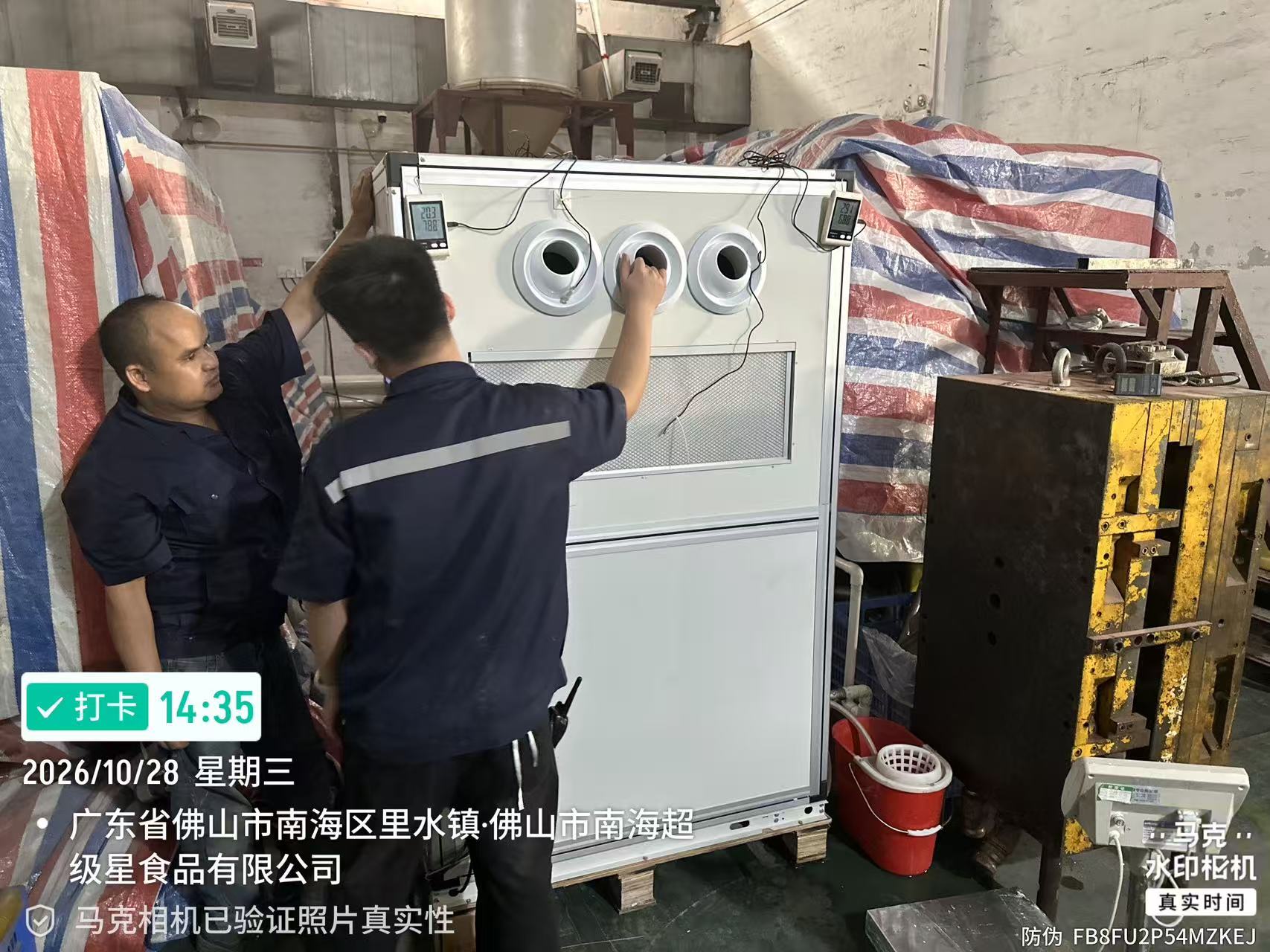
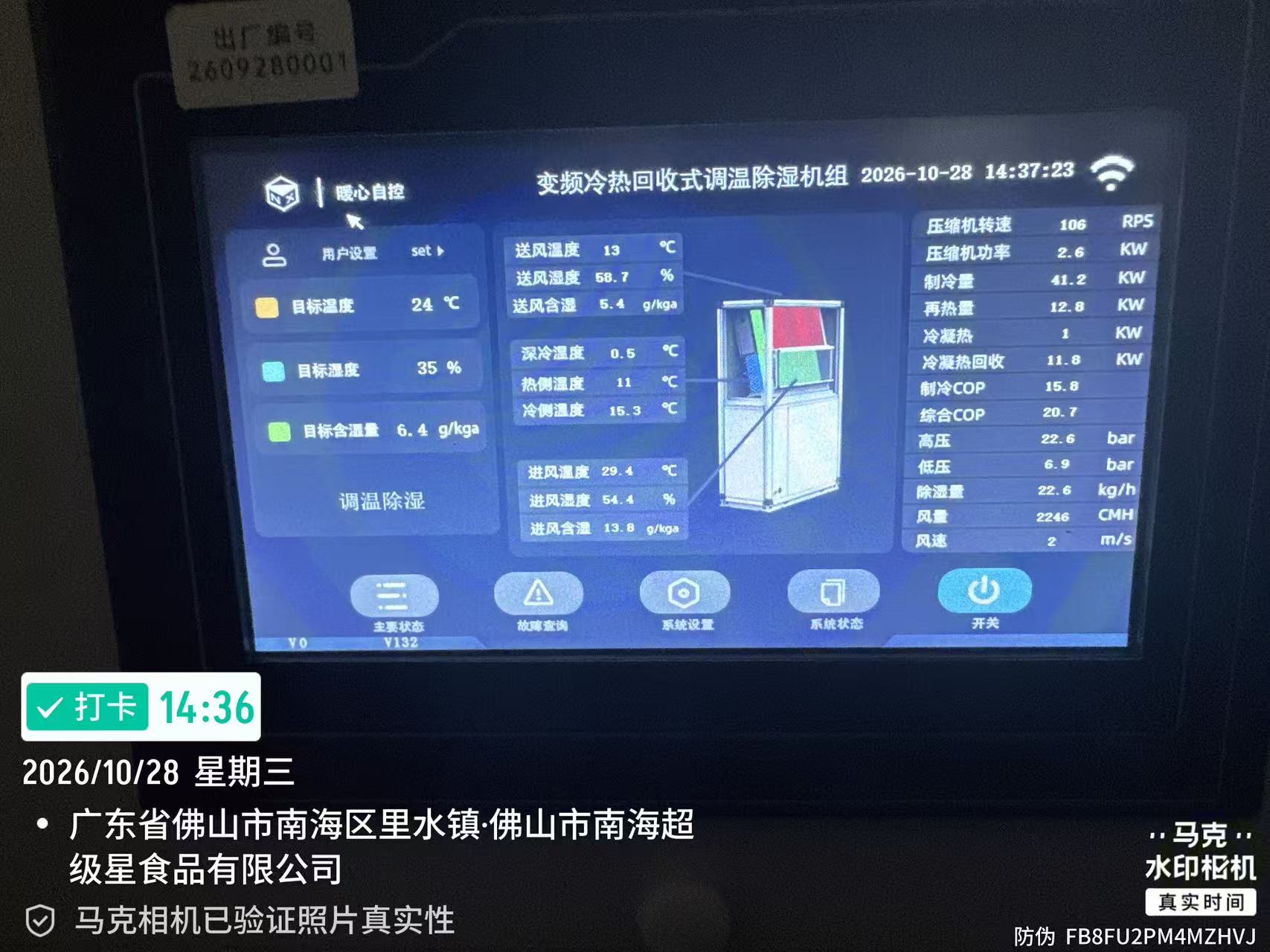
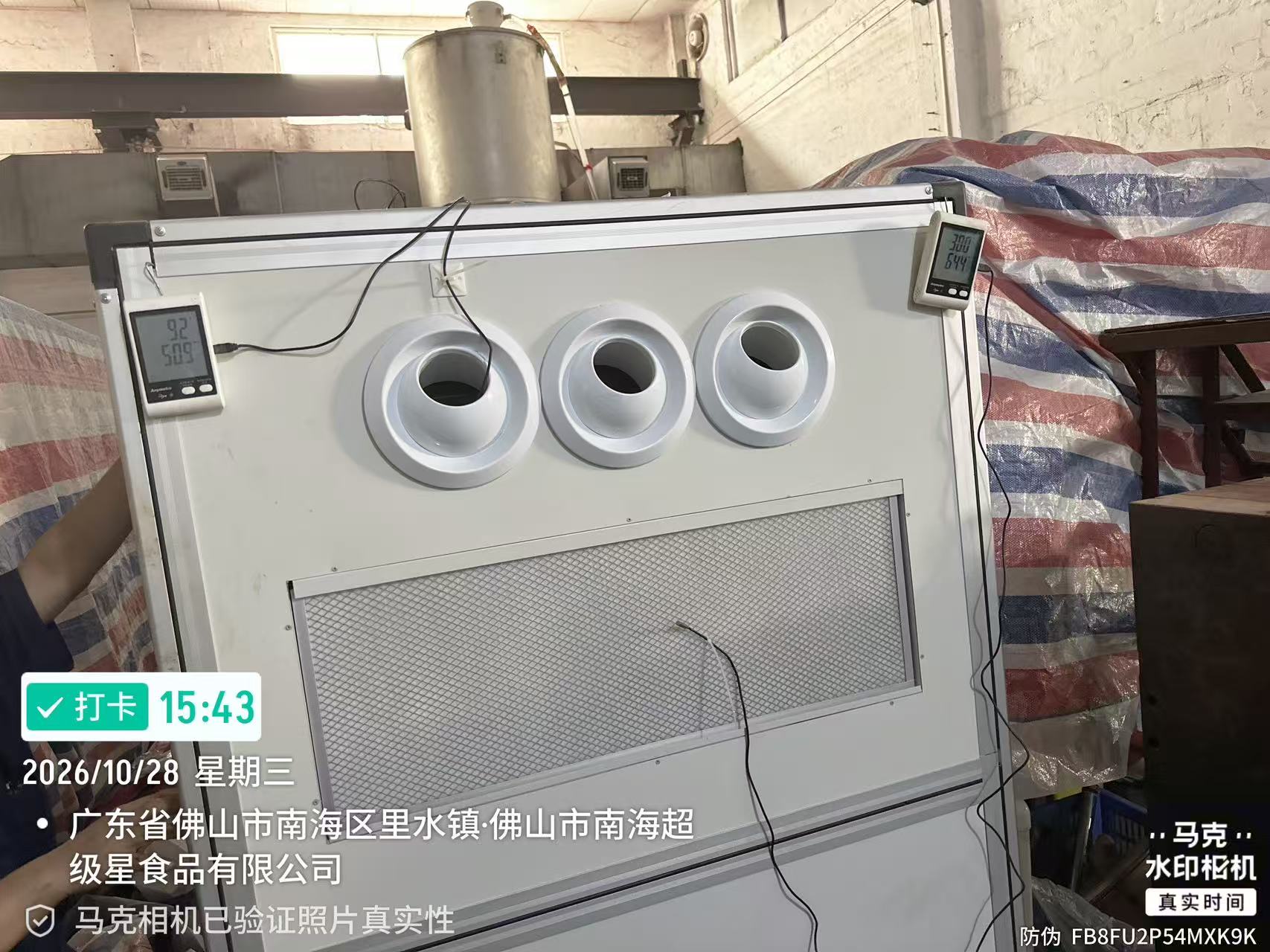
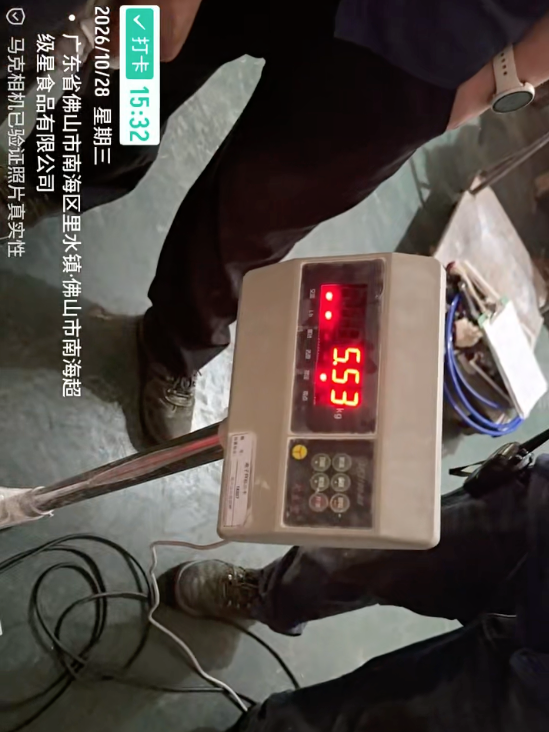
Foshan food factory retrofit.
Target roughly 22–24°C / 42–50% RH. Existing chilled-water dehumidification with cooling-water reheat could not hold humidity in monsoon weather. Retrofit: one water-cooled 5RT inverter heat-pipe unit. Full write-up on the official site: nunx-tec.com/strength/28.
Table 2 — Humidity-treatment power comparison (deep-cool approaches)
| Metric | Conventional deep-cool (12°C) | Heat-pipe heat-recovery approach (2°C) | Difference |
|---|---|---|---|
| Effective cooling used for dehumidification | 3.53% | 61.12% | ≈17.3× 61.12 / 3.53; +57.59 pp |
| Cooling required for 50 kg/h moisture removal | 424.70 kW | 105.00 kW | −75.3% (105.00 − 424.70) / 424.70 |
| Reheating required | 380.00 kW | 69.00 kW | −81.8% (69.00 − 380.00) / 380.00 |
| Airflow | 8,500 CMH | 9,000 CMH | +500 CMH |
| Equivalent cooling-source power | 86.36 kW | 6.90 kW | −92.0% (6.90 − 86.36) / 86.36 |
| Electric reheating | 380.00 kW | 0 kW | −100% |
| Total calculated power | 466.36 kW | 6.90 kW | −98.5% (6.90 − 466.36) / 466.36 |
Source note uses a 25°C / 45% return-air condition with constant-temperature supply. Actual installations may not require constant-temperature supply — total calculated power can differ from field results for that reason. Results are project-specific and depend on process load, climate, equipment selection and operating conditions.
FIELD CASE / 18 m² LAB
Small room. Demanding conditions. One unit for temperature and humidity.
In an 18 m² laboratory, cooling alone is not enough: low humidity also calls for stable temperature. A conventional solution often combines precision air conditioning with separate dehumidification and reheat. NUNXIN integrates both controls in one unit, reducing operating power and solution cost for this project.
25±5%RH
Temperature and humidity control targets
Average operating power: 1.5 kW vs 18 kW for the conventional solution
Approximately 92% lower average power
Solution cost: 30–50% of the conventional solution


Project figures provided by the customer on site; actual results vary with load and operating conditions.
04B / TYPICAL CASES
Industrial temperature & humidity cases.
Six featured field projects from nunx-tec.com/strength — food, pharma, laboratory and casting. Each card opens the official English case page in a new tab; use View all cases for the full listing.
Food Processing
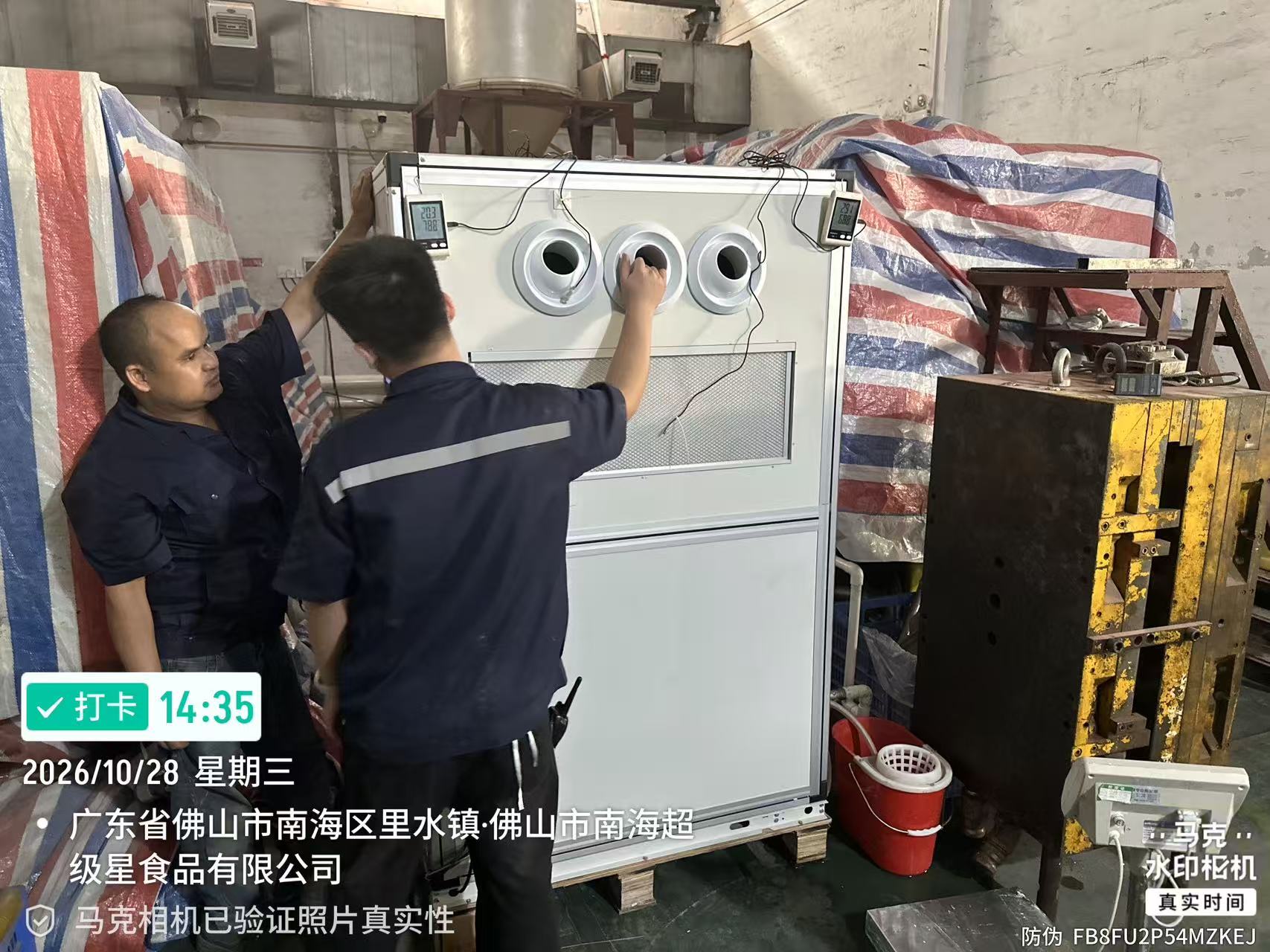
Energy-saving retrofit of a 5RT variable-frequency heat pipe dehumidification heat pump at a food factory in Foshan
Foshan food factory retrofit with a water-cooled 5RT variable-frequency heat-pipe dehumidification heat pump; case notes 4.4 kg/kW at 27°C/70% vs ~2.1 kg/kW for a typical industrial dehumidifier.
Read case study →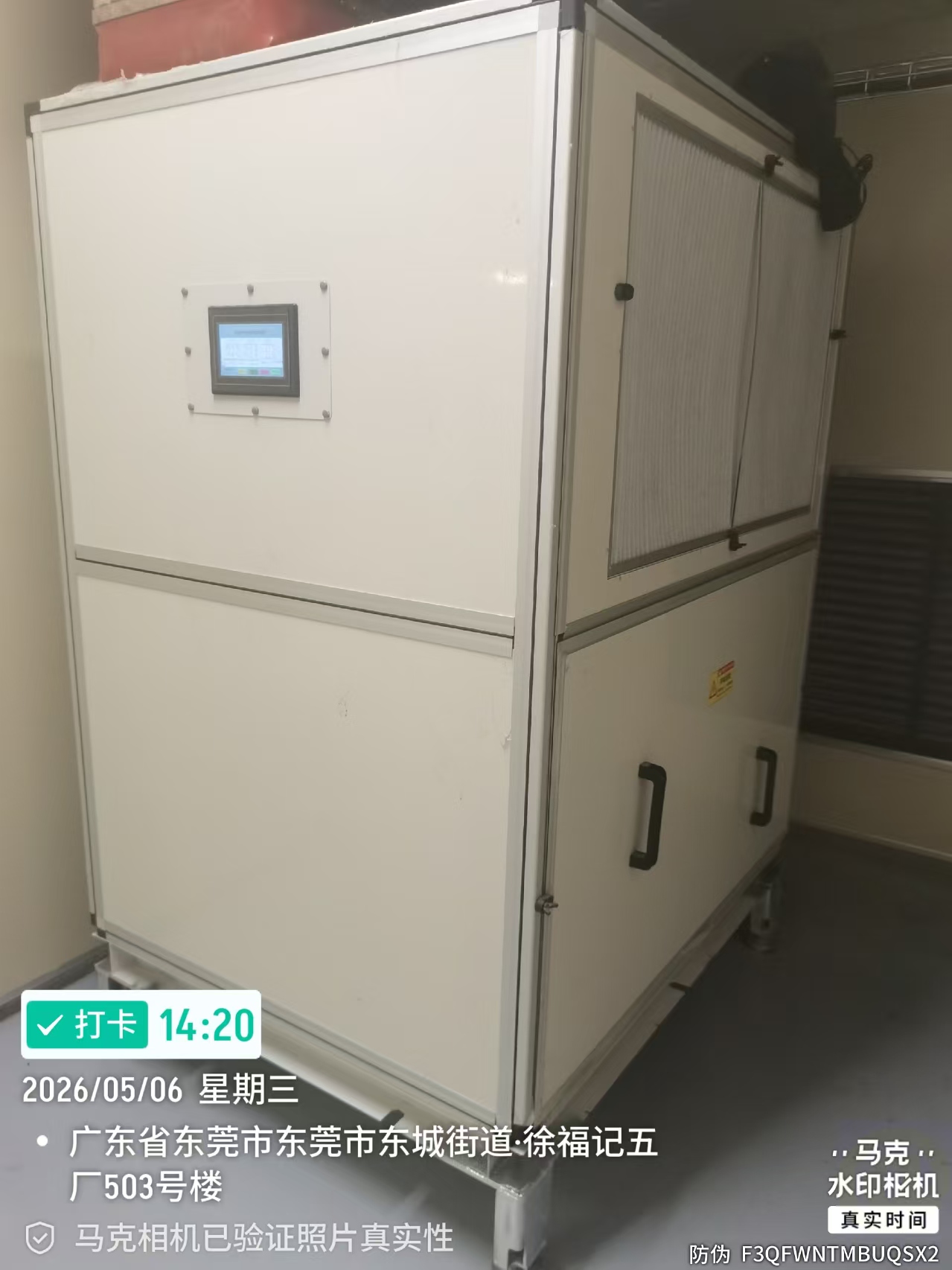
Food Processing
Replacement of desiccant wheel dehumidifiers in the temperature and humidity-controlled production workshop of a well-known Taiwanese-funded food group.
Dongguan Taiwanese-funded snack workshop (8th year of purchasing); ~300 m², 6 m height, target about 23°C and below 45% RH, replacing desiccant-wheel dehumidifiers.
Read case study →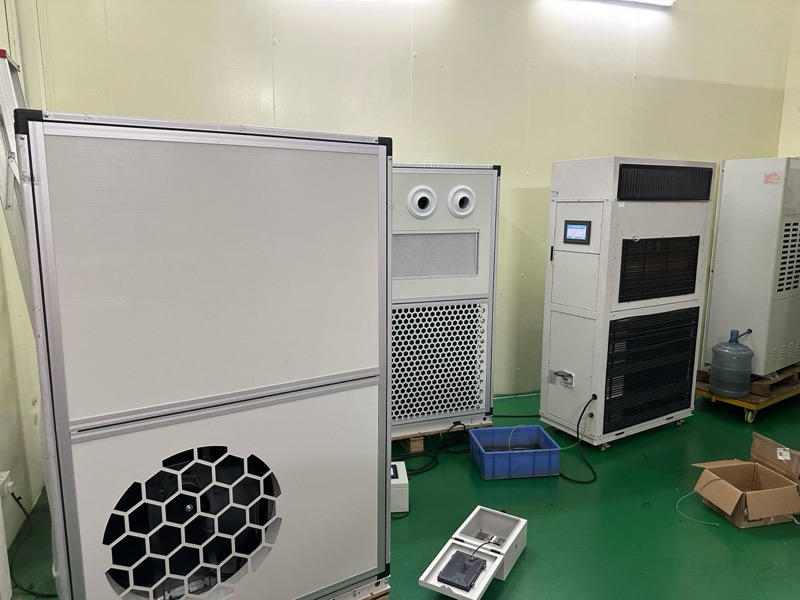
Industrial temperature and humidity control
Schneider Precision Air Conditioning Enthalpy Difference Laboratory Dehumidification Project in France
France Schneider precision air-conditioning enthalpy laboratory; humidity needed below 20%, where a customer-bought 10P industrial dehumidifier could not reach the target.
Read case study →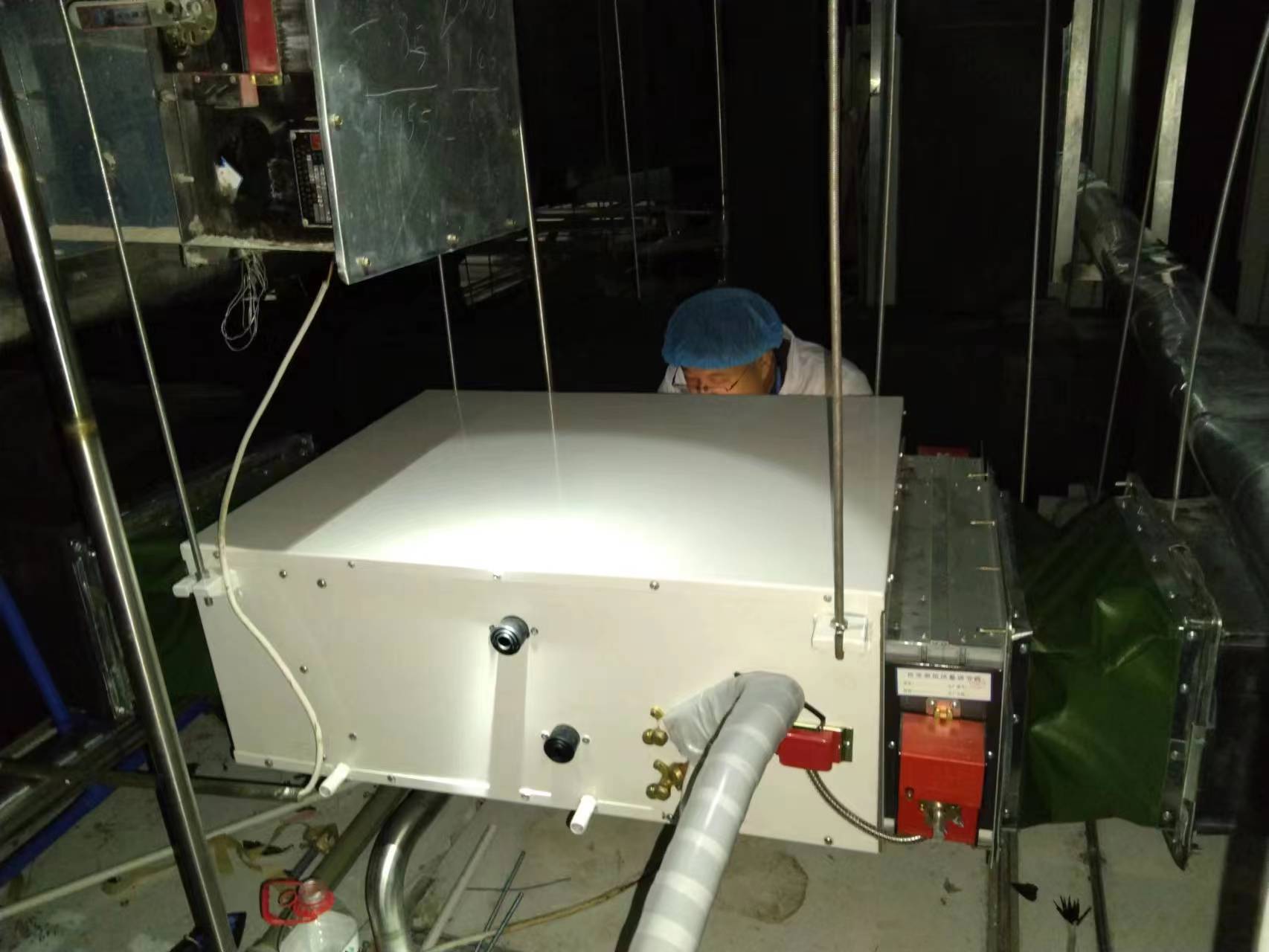
Industrial temperature and humidity control
Fresh air dehumidification project for the cephalosporin workshop of a pharmaceutical company in Chengdu.
Chengdu pharmaceutical cephalosporin solid-preparation cleanroom fresh-air dehumidification; listing notes stable 50–60% RH control with dew point as low as 3–5°C.
Read case study →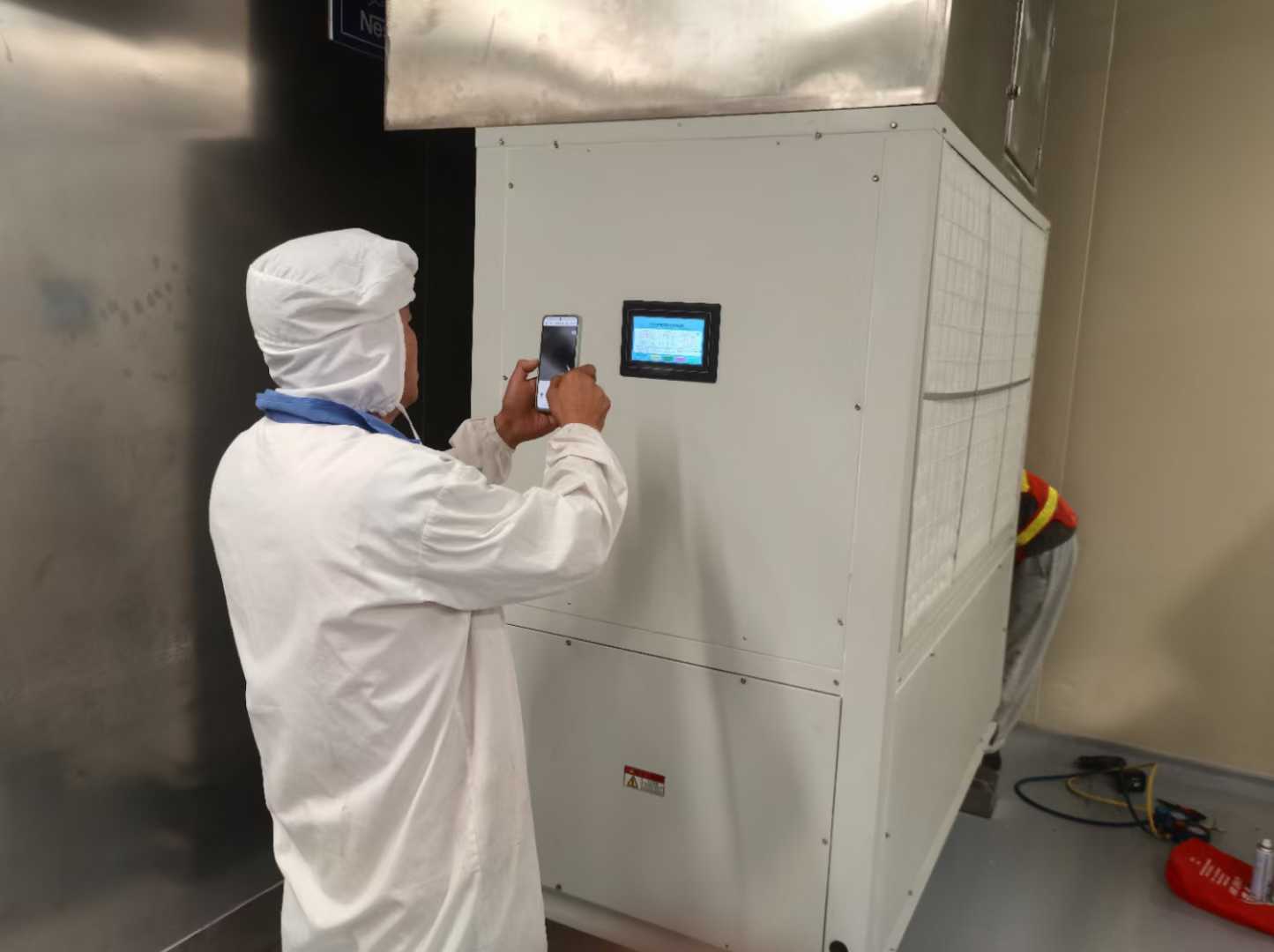
Food Processing
Case Study: Low Dew Point Variable Frequency Air-Cooled Temperature and Humidity Control, Halving Energy Consumption in Gummy Production Workshop
Gummy production workshop case for low dew-point variable-frequency air-cooled temperature and humidity control, described as halving dehumidification energy use.
Read case study →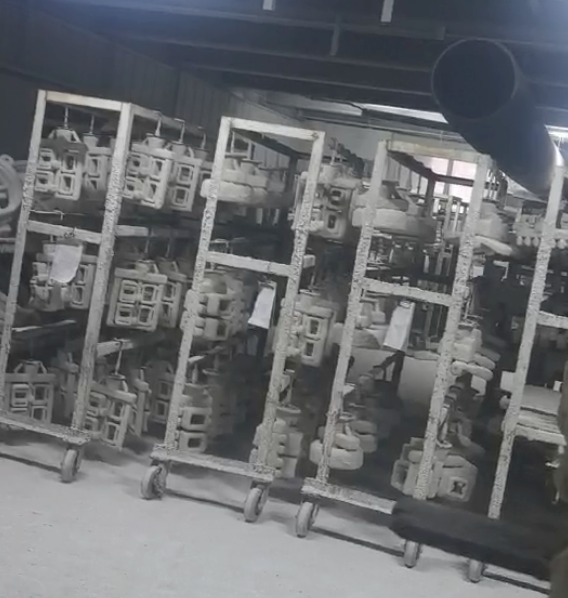
Industrial temperature and humidity control
Heat pipe inverter dehumidifier in the precision casting field - saving millions in electricity costs annually
Precision-casting foundry retrofit with heat-pipe inverter dehumidifier; case comparison reduced operating power from 145 kW to 11.7 kW versus chilled water + electric heat.
Read case study →Titles and summaries are taken from the official case listing/pages. Performance figures on those pages are project-specific.
05 / MODELS
Three configurations. Same core.
NX-FL2000BP-5 series — Mitsubishi inverter compressor, EC fan, airflow 500–2,000 m³/h, R410A. At 29°C / 65% RH: 12 kW cooling with 11 kg/h dehumidification.
Water-cooled
NX-FL2000BP-5
- Rated input 2.5 kW
- Rated current 3.9 A
- Nominal moisture 10–11 kg/h
- Soft start <1 A
Air-cooled integrated
NX-FL2000BP-5
- Rated input 3.5 kW
- Rated current 5.51 A
- Nominal moisture 10–11 kg/h
- Single-cabinet outdoor heat rejection
Air-cooled split
NX-FL2000BP-5
- Rated input 3.5 kW
- Rated current 5.51 A
- Indoor + outdoor split
- Same dual heat-recovery core
Download English product catalog (PDF)
Catalog includes operating modes, installation sketches and parameters. Power supply 380V~480V / 50Hz or 60Hz.
06 / APPLICATIONS
Built for process-critical rooms.
Food processing
Pharmaceutical
Lithium battery
Laboratory
Cleanroom
Raw-material storage
Medicinal herbs
Cigar drying
Data center
Precision manufacturing
Chemical production
Edible fungi
07 / SIZING
Get a project sizing quote.
Share five engineering inputs. We open WhatsApp with a prefilled brief — no backend, no waiting for a form email.
- WhatsApp +86 135 0154 8155
- Email gwj@nunx-tec.com
- OEM / ODM projects supported
- Typical lead time ~15 days (confirmed per order)
08 / FAQ
Questions buyers actually ask.
Answers drawn from the Foshan food-factory engineering Q&A — written for overseas plant and OEM buyers. Where a number is project-specific, we say so.
How is this different from a standard AHU / chilled-water constant-temperature cabinet?
A conventional cabinet typically uses chilled water to cool and dehumidify, then cooling-water heat to reheat. Our heat-pipe scheme uses direct expansion with heat-pipe and condenser heat recovery for reheat; surplus heat leaves through an outdoor exchanger or water. In the supplied plant comparison, effective moisture-removal cooling was about 3.53% for the conventional approach vs 61.12% for the heat-pipe approach (about 17×). Chilled-water pipe insulation is not required for our dehumidification path, so drip risk and periodic insulation replacement for that loop are avoided.
How is this different from a conventional industrial dehumidifier (e.g. CFZ6.3B)?
At the case’s 27°C / 70% RH note, moisture removal per input power is about 4.4 kg/kW vs 2.1 kg/kW for a typical industrial dehumidifier. The conventional unit adds heat to the room (~2.57 kW heat per kW input) and still needs an air conditioner; ours delivers cooling from the same cycle — 12 kW cooling + 11 kg/h at 29°C / 65% RH. For an equivalent treatment duty, the case models a dehumidifier + AC (COP 5.0) at about 3.18 kW input vs 1 kW for the heat-pipe unit — about 31.5% of that stack, or roughly 68.5% less energy. Full CFZ6.3B vs NX-FL2000BP-5 rows are in the comparison table. Heat-pipe recovery also reduces the performance drop that ordinary dehumidifiers show as target humidity falls.
What maintenance is required?
Typical maintenance is regular filter replacement and heat-exchanger cleaning. There is no chilled-water pipe insulation cycle to replace for the dehumidification path.
How does energy compare with a desiccant wheel?
In the referenced comparison, the supplied heat-pump system used about 10% of the energy of the desiccant-wheel equipment. Desiccant projects in the case used roughly 3–4 tonnes of steam per day and rotor replacement about every 7 years. Treat the 10% figure as project-specific and recheck for each duty, climate and load.
What moisture removal can we expect around 45% RH?
At a recirculating-air condition of 25°C / 45% RH, the case states approximately 7 kg/h of moisture removal. Confirm against your moisture load and selected configuration.
How much floor area can one unit serve?
In a sealed clean room with no exhaust and no internal heat sources, one unit can provide temperature and humidity control for about 30 m² at roughly 22–24°C / 42–50% RH. Larger rooms, exhaust, or process heat need a fresh load calculation.
Can this improve our central chiller plant efficiency?
In the Foshan case, the central plant held cooling water at a fixed 30°C / 35°C, which limited year-round performance. With the inverter heat-pipe unit taking the humidity duty, cooling-water temperature can follow wet-bulb instead. Foshan’s annual average wet bulb is given as 19.8°C; under that framing the central plant was estimated to cut energy by about 24.4% (lower condensing temperature → higher COP). Recalculate for your climate and plant controls — this is a project estimate, not a universal guarantee.
What reference projects can you share?
We have supplied Hsu Fu Chi (Dongguan) continuously for 8 years; many of their workshops use our equipment, and they have been replacing Munters desiccant wheels and Hitachi chillers with our units over time. A customized project for a Guangdong sports-equipment manufacturer reported electricity-cost savings of over RMB 1 million per year in their statistics. Ask for the case pack that matches your industry.
How does 12 kW cooling fit with 5 HP energy?
Dual heat recovery lets one compression cycle deliver dehumidification and useful cooling — so one unit can replace a dehumidifier plus a separate air conditioner. At the tested condition of 29°C / 65% RH, the unit delivers 12 kW cooling together with 11 kg/h dehumidification.
Do you support OEM / ODM?
Yes. Project-specific selection, control integration, factory testing and OEM/ODM cooperation are supported. Share your market, target condition and cooperation model on WhatsApp.
What is the lead time?
Typical lead time is about 15 days; confirmed per order based on configuration and quantity. Ask on WhatsApp for the current schedule for your model.
FAQ figures are tied to the Foshan food-factory case materials and related product table. Final energy use, moisture removal and cooling depend on process load, climate, equipment selection and operating conditions.